

After a long while, I’ve begun uploading new additions to the free .pdf library. Here are the two most recent entries:
Continue reading
After a long while, I’ve begun uploading new additions to the free .pdf library. Here are the two most recent entries:
Continue reading
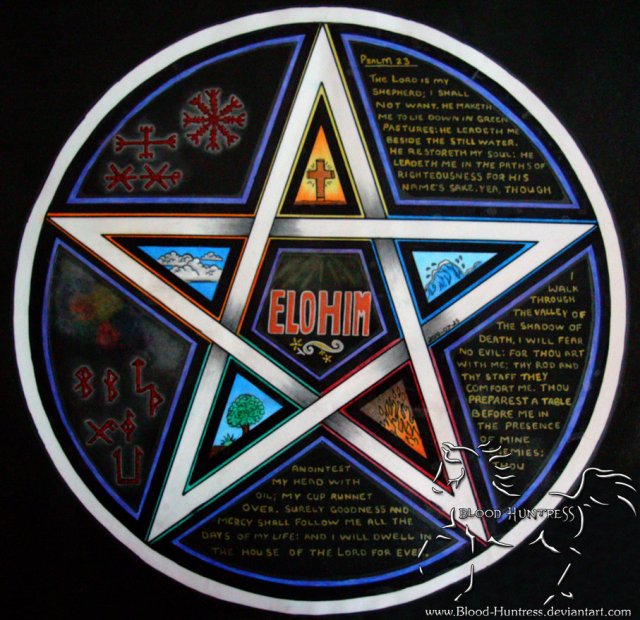
Image Credit: Blood-Huntress.deviantart.com
A year and some change ago, I wrote a brief tractate on the origins, structure, and potential theological issues inherent in the Lesser Ritual of the Pentagram, along with suggestions for solutions. Today I’d like to add a few notes to that post, things discussed over the past year.
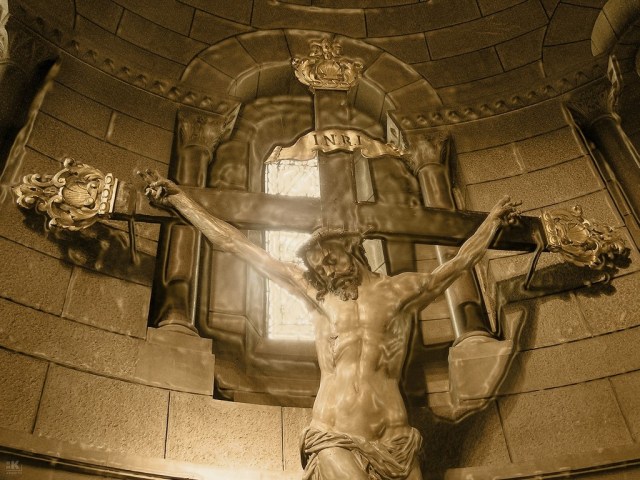
Reflecting on this for almost a decade, I’ve come to realize one of the problems with post-Vatican II Catholicism is a sort of Insistence on a Jewish identity.

“Mother of the Eucharist,” by Tommy Canning
In both exoteric and esoteric Christianity, the Blessed Virgin Mary plays a major role. Rank-and-file parishioners seek out her intercession in trials and tribulations, mystics sometimes describe experience of meeting her, and magicians high and low invoke her to get things done. What are we getting ourselves into?
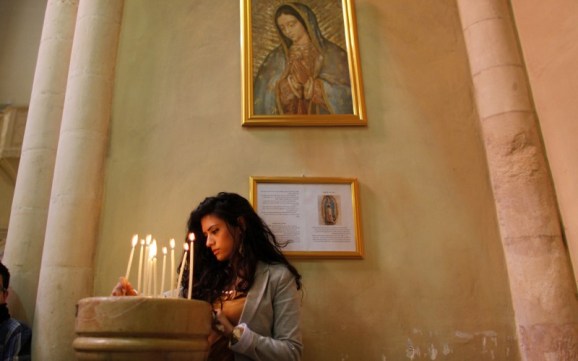
Last year we talked about what to do when your magic doesn’t seem to work. Today I’d like to give a few pointers addressing a few things that weren’t handled in that article. What’s below is excerpted from How to Pray the Rosary and Get Results; even though it deals specifically with prayer, it can apply to magical work just as easily. Here’s my take on the “difference” between prayer and magic if you’re interested.
We’ve done a lot of talking about origin, theory, and method. Now it’s time to talk about things that can go wrong.
Sometimes, especially when you’re just starting out, you may think your prayers aren’t being answered. Most times, this isn’t the case so much as the proverbial dominoes aren’t in place for the desired result to occur.
Case in point, I remember a time after a brutal break-up when I wanted my girlfriend back. I used the Pompeii Novena to this effect and even got back on talking terms with her, but no reunion came to pass. However, three years later I met and became involved with a woman who looked like her and had pretty much the same personality. Let’s analyze this for a minute.
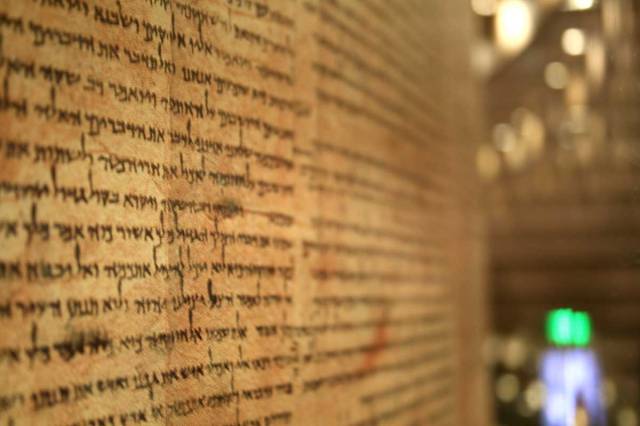
Latin, Greek, and Hebrew are the “Three Sacred Languages” at the root of Christian religious tradition as well as Western magical literature, and I’ve sometimes been asked about how to pronounce these languages correctly. I’m more than happy to oblige.
Below are the pronunciation charts given in what I’ve come to call the “core books,” The Magic of Catholicism and Ritual Magic for Conservative Christians.
You’ll note that pronunciations given here reflect systems used outside the classroom.

This is a subject that doesn’t get talked about often.
Most “beginner-level” books ignore it or take an attitude of “you’ll grow out of it.”
Others take an attitude of “you’ll never get anywhere if you can’t do it.”
What I’m talking about is visualization. Nearly all modern western magic since the late 19th-century has enshrined visualization as the foundation of all practice.
Why Is This Important?
A Childhood Conversation
I’m Guilty of It, Too
Yes, It’s a False Belief
Is Visualization Necessary?
What Should I Do About It?
Why Does This Work?
Concluding Thoughts
In a way, I’m reminded of something my mother told me when I was a child: “people think in pictures, not words.”
I responded, “Well I think in words.”
She said, “Think of a cow.”
I did, and told her so. She asked me, “Did you think the word ‘cow’ first, or did you think of a picture of a cow?”
I thought the word “cow,” but she wasn’t exactly accepting my answer.
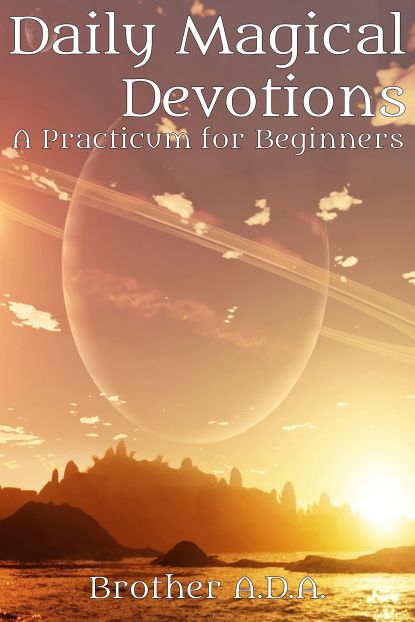
My labor is your gain! Originally I wrote this for the convenience of having each day’s morning and evening prayer work on one page, and now I pass it on to you.
The prayer-exercises in this book are the daily routine I’ve developed over the course of the past year, and are the beginning exercise I’ve begun prescribing to students: attune yourself with the daily cycles of sunrise and sunset, get in touch with the forces each day represents, and open yourself up as a channel for manifesting divine energy into the world.
Make no mistake, the prayers in this book are magical prayers, though disguised as “normal” devotions so the average person would think nothing of them (as is my normal method). These prayers also admit to being used in ways other than just regular devotion, and that’s a method I may discuss in future blog posts.
For more great FREE .pdf content, check out our library!

“And let the one who has no sword sell his cloak and buy one . . . And [the disciples] said, ‘Look, Lord, here are two swords.’ And he said to them, ‘It is enough.'” — Jesus (Luke 22:36, 38)
With the exception of one passage in Matthew (5:39), there is no point at which Jesus decries weapons or self-defense, and even that passage is intensely debated — nonresistance? another chance before resisting? Et cetera.
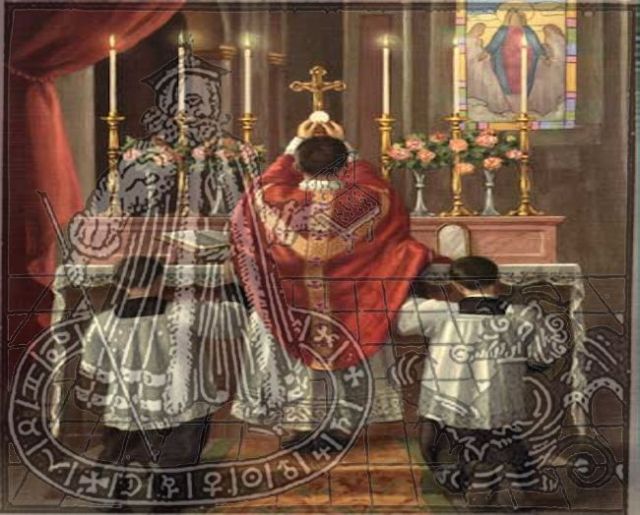
Would a spirit react differently to someone with the Power of Order than to someone without it?
I doubt that it would, since Power of Order isn’t required to exorcise (the whole question in Canon Law revolves around Power of Jurisdiction), and every pre-1965 exorcism formula contains within itself a conjuration.
Of course, though, we’re also looking at the fact a lot of the grimoires were written for clergy, at least one (Honorius) assuming Power of Order since it directs the operator to say Mass, while scholars such as Kieckheffer (Forbidden Rites, 1999) and Peters (The Magician, the Witch, and the Law, 1978) speak of clerical magicians — Kieckheffer claims clerical magicians were as scandalous then as child-molesting priests are now — we even see Chaucer’s parish-clerk Absalom resorts to a “true-love herb” (some texts say “talisman”, go to p. 70) to seduce the carpenter’s wife Alison (“The Miller’s Tale,” line 3692). Poem 54 of the Carmina Burana (“Omne genus demoniorum”) also takes the form of a magical rite, conjuring and banishing dryads and the elves Gordan, Ingordin, and Ingordan “by the seal of Solomon, by Pharaoh’s magicians,” and “through the miraculous and ineffable name of God, Tetragrammaton.” (my translation)

English:
$15.00 Coil-Bound (Lulu)
$15.00 Paperback (Amazon)
Español:
$10.00 Encuadernado en Espiral (Lulu)
$10.00 Libro de Bolsillo (Amazon)
 THAVMA: Christian Occultism and Magic in General